
Hand luggage rules 2025: The ultimate guide to safe and hassle-free travelling
Once you've booked your flight, there's one thing many people overlook in their preparations: hand luggage. It may seem simple, but hand luggage rules are filled with details that can make the difference between a smooth departure and a frustrating start to your journey.
In this guide, you'll find an updated review of the 2025 carry-on baggage rules, including the important rules on liquids in carry-on baggage, size restrictions, packing tips and what to do if things go wrong at the airport.
What do carry-on baggage rules actually cover?
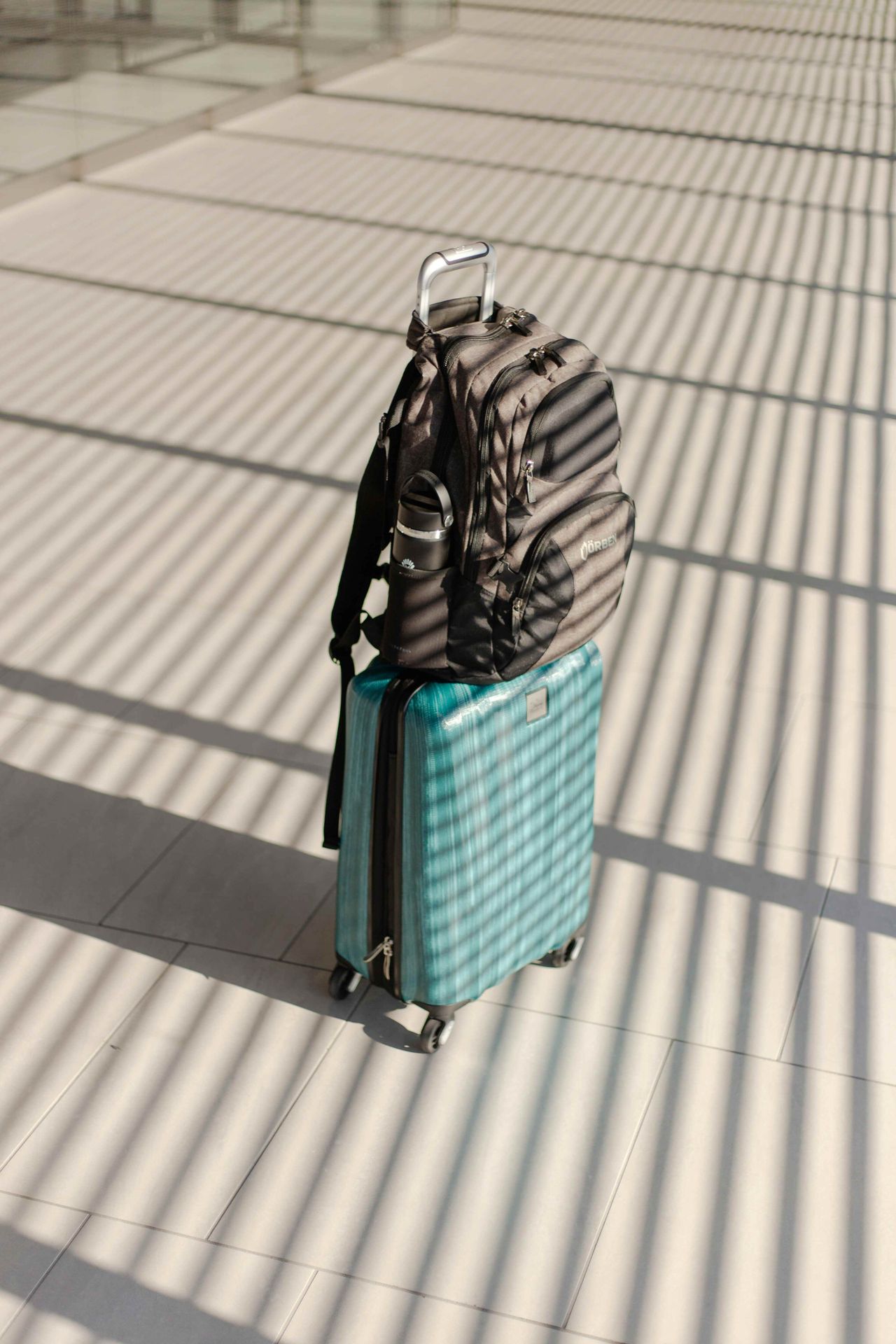
When you fly, you are generally allowed to take a small bag into the cabin - this is called hand baggage or cabin baggage. You can carry this baggage on board and keep it with you throughout your journey. It can be a small suitcase, a backpack, or a bag - but only if it fits within the airline's size and weight requirements.
It's important to note that carry-on baggage rules can vary depending on the airline you fly with. However, there are some general guidelines that apply to most flights.
Standard carry-on baggage rules in 2025
Although there are variations, the vast majority of European and international airlines follow similar guidelines. Here is an overview of the most common carry-on baggage requirements:
Maximum dimensions: 55 cm x 40 cm x 23 cm
Weight limit: Typically between 7 and 10 kg
Number of items: One carry-on + one personal item (e.g. handbag, laptop or camera bag)
If you fly with airlines like Ryanair or Wizz Air, you need to pay extra attention. With them, only one small bag is included in the cheapest ticket, and if you want to take a larger hand luggage, you need to purchase Priority Boarding or a baggage package.
Liquids rules for hand luggage - how to avoid problems at security checkpoints
One of the places where most travelers run into problems is at the security checkpoint - and it's almost always due to liquids in hand luggage.
Here are the current rules for liquids in hand luggage:
All liquids must be in containers with a maximum capacity of 100ml
All containers must fit in one transparent and resealable plastic bag
The total amount of liquid must not exceed 1 litre
The plastic bag must be presented separately at the security checkpoint
Examples of liquids include:
Shampoo, conditioner and soap
Sunscreen, creams and make-up
Toothpaste and shaving gel
Beverages and liquid foods
Hand sanitizer and disinfection
💡 TIP: Use travel-friendly bottles and use a 1-litre bag - many come with a zip that fits snugly in your bag. Sørg også for at ankomme i lufthavnen i god tid, så du stadig når dit fly i tilfælde af at der skulle opstå komplikationer.
Exceptions to the fluid rules
There are a few exceptions where you can take liquids over 100ml in your hand luggage:
Baby food and breast milk (applies when travelling with small children)
Medical fluids (often requires documentation)
Special diets or needs (if needed during the flight)
But even then, you may be asked to open or taste the liquid, so make sure you have documentation or clear packaging to avoid problems.
Here's what you can't take in your hand luggage
Although the rules have become a little more relaxed over the years, there are still a number of items that are completely forbidden in the cabin:
Sharp objects such as scissors, pocket knives and nail files
Tools, weapons or anything resembling weapons
Explosive or flammable substances
Spray cans without documented medical need
Larger liquids or containers over 100ml (whether almost empty or not)
It's a good idea to double-check your content before travelling - not only to avoid hassle, but also to save time at the airport.
Below you can see some of the major airlines' rules regarding handbag size and maximum weight.
Airline company | Size (cm) | Max. Weight | Personal item allowed? |
|---|---|---|---|
SAS | 55 x 40 x 23 | 8kg | Yes |
Norwegian | 55 x 40 x 23 | 10kg | Yes |
Ryanair | 40 x 20 x 25 (without Priority) | 6-10kg | Only with Priority |
Lufthansa | 55 x 40 x 23 | 8kg | Yes |
✈️ Note: Remember that the measurements and weights mentioned are maximum - many bags/suitcases should slide easily into the measuring box at the gate.
What happens if hand baggage is rejected?
If you exceed the allowed dimensions or weight limits, you may be forced to check your bag for a fee.
Therefore:
✅ Check your hand luggage with a suitcase scale from home
✅ Use a soft bag if you are close to the measurements
✅ Consider buying priority if you have more than one bag
Are you travelling with children?
When travelling with small children, more flexible rules apply. You can take breast milk, baby food and medicines over 100ml in your hand luggage, but it must be declared and presented at security. The same applies to necessary equipment such as feeding bottles and thermos bottles.
Tips for packing hand luggage
A well-packed hand luggage can save you a lot of hassle:
Pack essentials first - such as electronics, passports and liquids
Roll your clothes to save space
Use packing cubes for better organisation
Keep a power bank and charger easily accessible
Avoid packing too tightly - many controls scan bag contents
In case of a disruption: Refundmore helps you with your rights as a passenger
Has your hand baggage been delayed, damaged or lost while traveling? Then you have rights as a passenger. You can read more about your baggage rights here. At Refundmore.com you can get guidance on your rights under EU law.
Travelling doesn't always go as planned and it's important to know your rights. That's why at Refundmore we help you if you experience a flight delay or cancellation. Many passengers don't realize that they can get up to €600 in compensation depending on the situation.
FAQ - Frequently asked questions about hand luggage
How much liquid can I take in my hand baggage?
You can bring up to 1 litre in containers of max. 100 ml.
You can read more about liquids in hand luggage here.
What happens if my bag is too big?
It may be rejected and must be checked in - often for a fee.
Can I bring food in my hand luggage?
Yes, but liquid or soft food may be considered liquid.
Can I take medication with more than 100ml?
Yes - if needed while traveling, documentation is recommended to have prepared.